
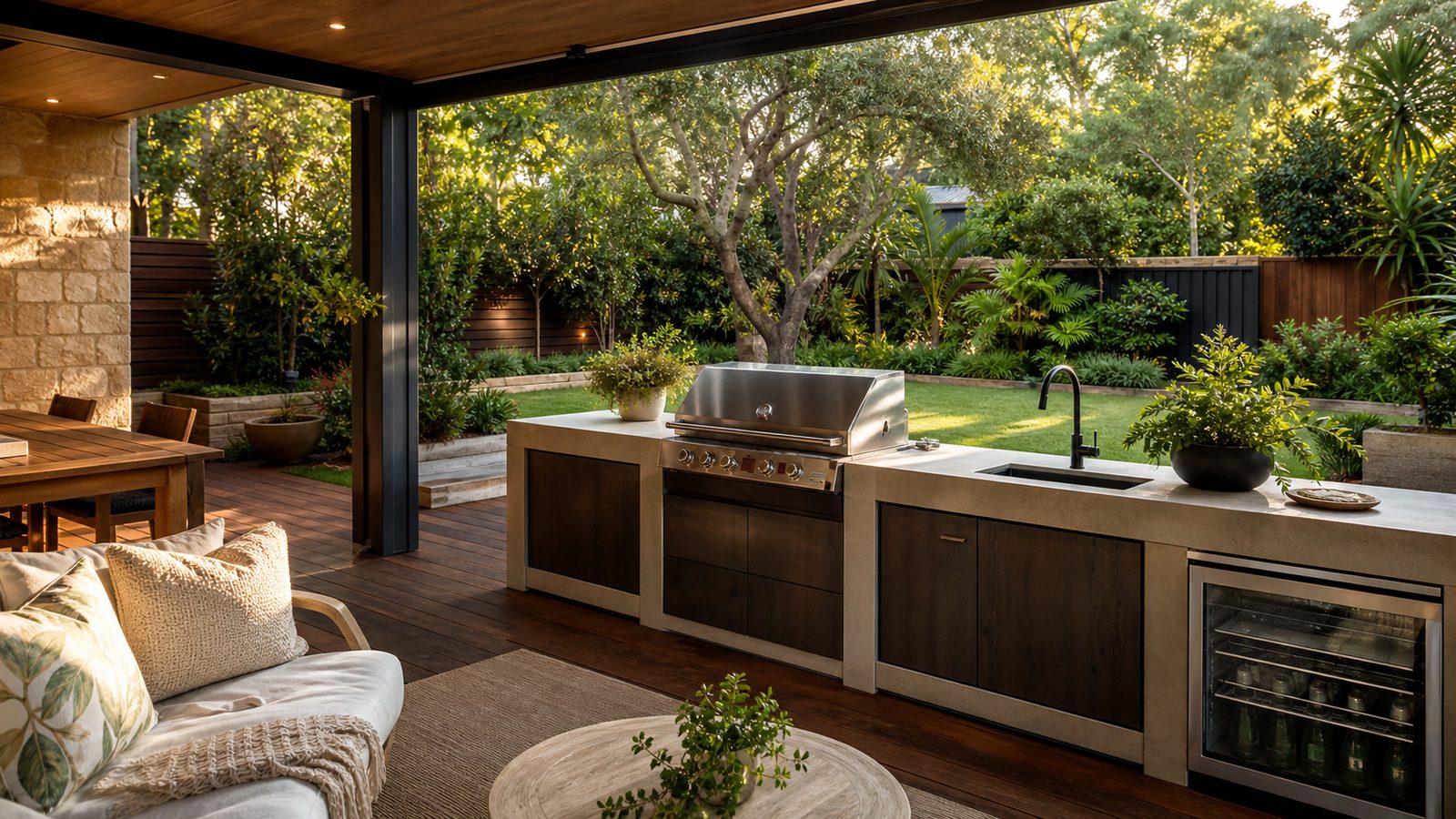
Separate the appliance problem from the kitchen problem
Replacing a built-in BBQ does not always require rebuilding the surrounding outdoor kitchen. It also does not follow that any new BBQ with the same burner count will fit. Begin by naming the problem: a failed component, an appliance that no longer suits your cooking, deteriorated cabinetry or an awkward layout. Ask an appropriate service professional whether repairing the existing appliance is a viable option. That answer helps you compare a repair, a like-for-like replacement and a larger alteration on the same basis.
For a Cranbourne alfresco that has changed hands, gather whatever information came with the house. Look for an appliance manual, purchase invoice and installation records, then photograph the model plate where it is safely accessible. Record the model and fuel type rather than relying on the brand badge on the hood. A kitchen can contain an older appliance from a discontinued range, so the visual resemblance to a current showroom model is not reliable evidence of compatibility.
Describe how you use the BBQ now. Perhaps the hood is awkward to lift beneath a shelf, the grease tray is difficult to remove or the cooking surface is poorly suited to your usual meals. Keep that list separate from the faults. A replacement that fixes the broken burner while preserving every frustrating detail may be a missed opportunity. Equally, changing the entire kitchen to solve a serviceable appliance fault may be unnecessary. Establish the scope before choosing the replacement.
Measure the opening and the space around it
Ask the installer to record the existing cutout and the supporting arrangement, not merely the width across the visible face. Include depth, height, front edge, rear space and the material around the appliance. Photograph the underside and access panels if they can be viewed safely without dismantling gas connections. Measurements taken for an initial discussion are useful, but the person responsible for the replacement should verify them before the order is finalised.
Manufacturer drawings distinguish appliance dimensions from installation dimensions. BeefEater's built-in dimension guide, for example, shows different cutouts and clearances across ranges and directs buyers to the supplied manual for detailed installation instructions. Use the current instructions for the exact model being purchased. The number of burners or the overall width on a retailer's listing is not a complete installation specification.
Look beyond the opening as well. Show the hood fully open, the nearest wall or splashback, any overhead structure and adjacent storage. Include the front space needed to remove trays and reach controls. A new appliance may occupy the same hole but move differently above and below it. Ask the installer to mark these movements on the plan so the cabinetmaker can assess the whole fit. This is especially important where a shelf or raised bar sits behind the existing BBQ.
Confirm the fuel and installation arrangement
Tell the installer which fuel supply the existing appliance uses and provide the model plate information. Ask them to confirm the proposed replacement's approved fuel configuration and connection requirements. Do not assume a unit can be converted because another model from the same brand can. If conversion is proposed, have the installer identify the manufacturer-supported parts and procedure for that exact appliance, together with the work included in the quote.
Energy Safe Victoria requires electrical and gasfitting work to be carried out by appropriately qualified, licensed professionals. Leave disconnection, reconnection and assessment of the supply to those trades. Your preparation role is to provide documents, photographs and a clear description of the intended cooking setup. Do not loosen connections or remove the appliance to obtain a measurement that the installer can take during the assessment.
The surroundings may have changed since the original BBQ was fitted. Tell the installer about later blinds, glazing, roof changes and new cupboards. Include any outdoor heater or pizza oven in the current layout. A replacement appointment is a chance to assess the actual arrangement, not simply repeat the old connection. The blinds and ventilation guide explains why enclosure changes need attention even when the existing appliance has been used in that position for years.
Inspect what you hope to retain
Have the cabinetmaker or installer inspect the retained structure before treating it as a sound base for a new appliance. Point out discolouration, corrosion, loose panels, sticking doors and any known water entry. Ask whether those observations affect the replacement scope. A new BBQ can make old cabinetry look tired, but appearance and suitability are separate questions. The assessment should identify what can remain, what needs repair and what needs further investigation.
Ask how the appliance is supported. Some installations use brackets or a support system specific to a model; others rely on a particular opening detail. The replacement should use the arrangement required by its own instructions. Do not accept an improvised support merely because it hides behind the fascia. Have the installer show the intended method and include any required bracket, liner or other manufacturer-specified component in the supply schedule.
Look at access below the cooking unit. The space may contain a grease tray, services and parts that need inspection or removal. Ask whether stored utensils or a newly added drawer interfere with those functions. A cabinet modification that provides attractive extra storage can become a problem if it occupies service space. Mark the areas that must remain clear on the drawing and decide where the displaced items will go before the job begins.
Compare three realistic replacement paths
The first path is a compatible replacement that retains the existing opening and most cabinetry. It is attractive when the retained structure is suitable and a supported appliance fits the layout you want. Ask the contractor to identify exactly what compatible means: cutout, support, clearances, fuel, access and enclosure. A statement that the unit should fit is not enough to justify ordering it. Keep the supporting model information with the quotation.
The second path is a targeted alteration. That might involve a new front panel, a revised support arrangement or work to the benchtop and neighbouring cabinet. Ask the fabricator whether the existing material can be altered and what finish is achievable. Cutting an opening larger may be feasible in one kitchen and inappropriate in another. Making an opening smaller can require visible infill or a new top section, so approve the proposed appearance as well as the dimensions.
The third path is a larger reconfiguration. Consider it when the existing layout is difficult to use or the surrounding structure also needs replacement. Compare the new layout against the faults and frustrations you listed at the start. A bigger project should solve identifiable problems such as poor serving space or conflicting door swings. It should not be justified only by the availability of an appliance on sale. The outdoor kitchen service can support that broader discussion.
Test the cooking workflow before committing
Use the existing kitchen to rehearse the proposed arrangement with the BBQ off and cool. Place the normal serving tray, chopping board and utensils where they would sit. Mark any change in appliance width with removable tape. See whether someone can collect a plate without crossing directly in front of the cook. This simple exercise can expose the loss of a useful landing area when a replacement is wider than the old unit.
Consider the controls and hood from the cook's position. A control panel that looks tidy in a showroom may be harder to reach beneath an overhanging bench. A hood handle can change the way you stand while opening it. Ask to operate the prospective appliance in person if possible, and compare that motion with the space available at home. Include the people who normally cook rather than assuming everyone finds the same arrangement comfortable.
Review the adjoining fridge and sink at the same time. An open fridge door may block the cook, while a sink added later may occupy the only area available for a hot tray. Our fridge cabinet guide and sink retrofit guide address those connected decisions. You do not need to change every appliance now, but the replacement should leave a sensible arrangement for the equipment you already use and any future change you have genuinely planned.
Put removal and making good into the quote
Ask who disconnects the existing appliance, who removes it from the opening and who takes it away. A heavy built-in unit may need careful handling through a narrow side passage or across finished paving. Describe the access route and any steps before the contractor quotes. Clear the route as agreed, but leave the appliance and connections intact for the appropriate trades. Agree how nearby surfaces and the benchtop edge will be protected during removal.
Name every finishing task. If the old fascia covered an unfinished edge, removing it may reveal a surface that needs attention. A different hood position may expose marks on the splashback, while a revised cabinet opening may require a new panel that does not perfectly match aged finishes. Ask the contractor to explain those likely visual changes. Approve a sample or drawing where the alteration will be prominent, rather than expecting an exact match that has not been promised.
Clarify what happens if hidden deterioration is found after removal. Ask for the process used to document it, price additional work and obtain your approval before proceeding. This is more useful than pretending every concealed condition can be predicted. Keep the old and proposed model details in the same scope so there is no confusion if supply changes. If the appliance is delayed, agree how the unfinished opening and services will be left in the meantime.
Check the replacement as an installed appliance
At handover, compare the installed model with the approved schedule and ask the installer to demonstrate operation, cleaning access and any isolation controls you need to know about. Open the hood and remove the relevant trays as instructed. Check that doors and drawers still move as agreed and that the service panels remain accessible. A unit sitting neatly in the opening is only one part of the result you paid for.
Collect the installation records supplied by the trades and the manufacturer instructions for the exact model. Keep the receipt, model and serial details together. Ask which parts are covered by the appliance supplier and which work belongs to the installation contractor, so a later problem reaches the right person. If a support, enclosure or fuel detail changed during the job, request an updated record rather than retaining a drawing that describes the old arrangement.
Finally, revisit the original list of problems. The replacement should address the appliance fault and the usability changes included in the scope. Note any unresolved issue precisely, with a photograph and its location, and discuss it with the responsible contractor. Use the checklist below before the first visit to organise the same evidence. A careful compatibility decision can preserve useful cabinetry while avoiding the expense and frustration of ordering a BBQ that cannot be installed as intended.